


By: Izzy

You're Not Stuck. You're Negotiating With Yourself and Losing.
Gay men over 50 are not short on self-awareness. They are short on decisions. There's a difference.
By:
Rick Clemons
You're Not Stuck. You're Negotiating With Yourself and Losing.
Gay men over 50 are not short on self-awareness. They are short on decisions. There's a difference.
By:
Benjamin White
The queer community has long had to resist and fight for our rights. From Stonewall to the AIDS crisis to the present day.
My husband and I live near Chicago in the Midwest of the United States. I will be speaking about the devolving situation in the country I was born in.
Same-sex marriage was federally made legal in the United States in 2015. As I have previously mentioned, I was raised a Jehovah’s Witness. I knew I was different from the other boys from an early age, but I didn’t know how or why.
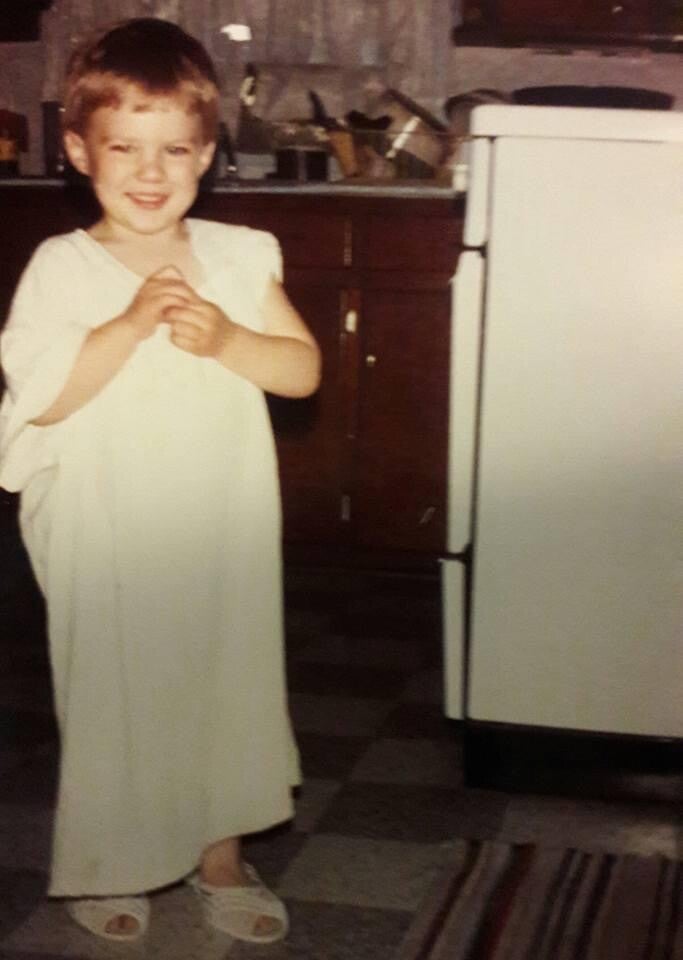
I enjoyed art and hated sports. I played with Barbie dolls, not GI Joes. As early as the age of four I was wearing my dad’s t-shirt as a gown, my mom’s high heels, and strutting around the house on my own imaginary runway.
Sex is not allowed in this belief system until marriage and queer sex is never allowed.
Writing about these rules takes my mind back to my “first love.” I started dating him when I was a senior in high school and had just turned 18. I've had two boyfriends before him, but I made sure to keep my virginity intact. When I met him I had been grappling with how I was going to be able to have sex since queer unions weren’t legal and I was saving myself for marriage.
I knew homosexual sex was always prohibited in the faith I was brought up in, but I had left a year previously, and was trying to make my own set of values. I had decided before I had met my third boyfriend that I would only have “real sex” when I was truly in love.
I had the usual teenage experimentation while in the religion and after I had left. I had gotten in trouble by a Judicial Committee of Jehovah’s Witnesses at age 16 when my teenage best friend had seduced me.
Ironically, his nickname was BJ and he was 15. He had sexual experiences with the other teenage boys in his congregation. They had reasoned that because they couldn’t have sex with a girl until marriage, they were allowed to have sex with one another.
This was very backward reasoning as homosexuality was a bigger sin than fornication in the Jehovah’s Witness faith.
One weekend he kept trying to get me to exchange blowjobs and fool around with him. At this point, it hadn’t really clicked with me that two men could have sex together. I was very naive, but very turned on by the idea. I remember laying in his bed watching TV while he talked dirty to me. I wanted to do physical things with him, but I had always been very concerned about breaking rules.
After two days of desperately resisting his advances, I gave in and had my first sexual experience.
Afterward, I felt so much guilt because of the brainwashing I had received about homosexuality.
I confessed and we were publicly reproved in front of our congregations. We weren’t allowed to be friends anymore. Many years later he found me and we had a few more physical experiences.
Not long after BJ and my first sexual encounter, I got in trouble when a different teenage boy talked me into masturbating next to him in bed.
Once again, the guilt washed over me and I confessed, but at this point I was fed up with the restrictions the congregation and my parents had placed on me. I felt they had stunted my growth as an adolescent.
I left the religion after that. I had just turned 17 and was disassociated (similar to excommunication in other religions).
My first kiss happened under a bridge while me and some friends were smoking weed a little after I had left.
My first and second real relationships happened that same year. With my official boyfriends, my experiences were mostly making out and grinding through our clothes, but I had also started enjoying some other more intimate acts without too much guilt.
I had always wanted to save myself for marriage, but like I said, this wasn’t possible because same sex marriage was illegal. I decided I was in “true love” with my third boyfriend that I started dating in my senior year of high school.
I remember the excitement and anxiety I had as I snuck him into my bedroom in my parent’s house while they were away. That night I lost my virginity. I didn’t regret it because at the time I had thought I was in love, but I was sad that we weren’t married when it happened.
When civil unions started becoming legal in various states, I could feel the excitement bubbling up in the queer community. My group of friends and I had fought our way through high school bullying and family opposition because of our sexual orientation.
The bullying at school had gotten so intense for me that I had a breakdown and had to homeschool for over a year, but I had resisted hiding who I was because of their abuse. We all had resisted and survived. We were out, proud, and loud about our sexual orientation and relationships.
Same sex marriage became legal 11 years ago in 2015 in the United States. By that time, the tolerance toward queer people had drastically increased and continued to improve over the years. It had gotten to the point where I didn’t really have to question if how I spoke, walked, and dressed were considered too gay. People seemed—for the most part—to mind their own business.
Homophobia and transphobia were still very much alive, but I kept seeing a lot more acceptance of my community. It was an amazing feeling to know that my resistance to my parent’s religion, small town high school, and beyond had played a tiny part in the progress I was seeing. I thought it would only keep getting better, but I was wrong.
In 2017 the United States lost their collective minds and elected Donald Trump as president. His administration started to rollback civil rights and healthcare of the LGBTQ+ community, focusing more on transgendered people.
They moved to try to ban trans people from serving in the military, repealed the act that prohibited discrimination for healthcare based on gender identity and sexual orientation, removed the policy of students using bathrooms that corresponded with their gender identity, and reversed a policy that protected trans people from discrimination in the workplace.
Joe Biden was elected in 2020 and his administration made many pro LGBTQ+ advances, including the Respect for Marriage Act in December 2022.
This act ensured that same sex marriages were federally recognized. The Biden administration also made important advances in appointments of queer government officials, removal of the ban on trans people in the military, establishing a Trans Day of Visibility, and expanding civil rights laws to protect the LGBTQ+ community from discrimination from employment and healthcare.
After all of these advances, I took for granted how much easier life as a gay man (I identified as gay at the time, but am actually pansexual) had become in the United States. It seemed as though no one could encroach on my rights any longer.
I remembered the dark periods in the past, but I was sure that we would keep making progress toward tolerance. I knew we still had to be out and visible, but I thought nothing could take us back to how terrible the past had been.
Trump being elected as president for a second term blindsided me completely and I didn’t know how much worse it could get for my queer brothers and sisters, especially for our trans family members.
On January 20, 2025 Donald Trump was inaugurated as the 47th president of the United States of America. He immediately declared on live TV that there were only two genders legally recognized in the US.
In only 507 days (as of June 11, 2026) his administration has managed to enact a ban on gender affirming care for adolescents and federal employees, removal of trans acknowledgement on federal websites, barred trans people from serving in the U.S. armed forces, moved to stop trans students’ bathroom policies and trans youth’s participation in school sports.
He has focused mostly on trans people and has used them and immigrants as a scapegoat for the problems going on in the U.S. This is terrifyingly similar to what happened to the Jews when Hitler first came into power in Nazi Germany.
If you are a trans person, please know that you are loved and supported. If you are a member of the LGBTQ+ community, please remember to give our trans brothers and sisters extra support during these dangerous times.
The president’s rollbacks on civil rights were not limited to only trans people though. He also ended the LGBTQ+ Suicide and Crisis Lifeline, allowed employers to discriminate against LGBTQ+ employees based on the employers religious beliefs, and has terminated the DEI programs, that guarantee diversity, equity, and inclusion.
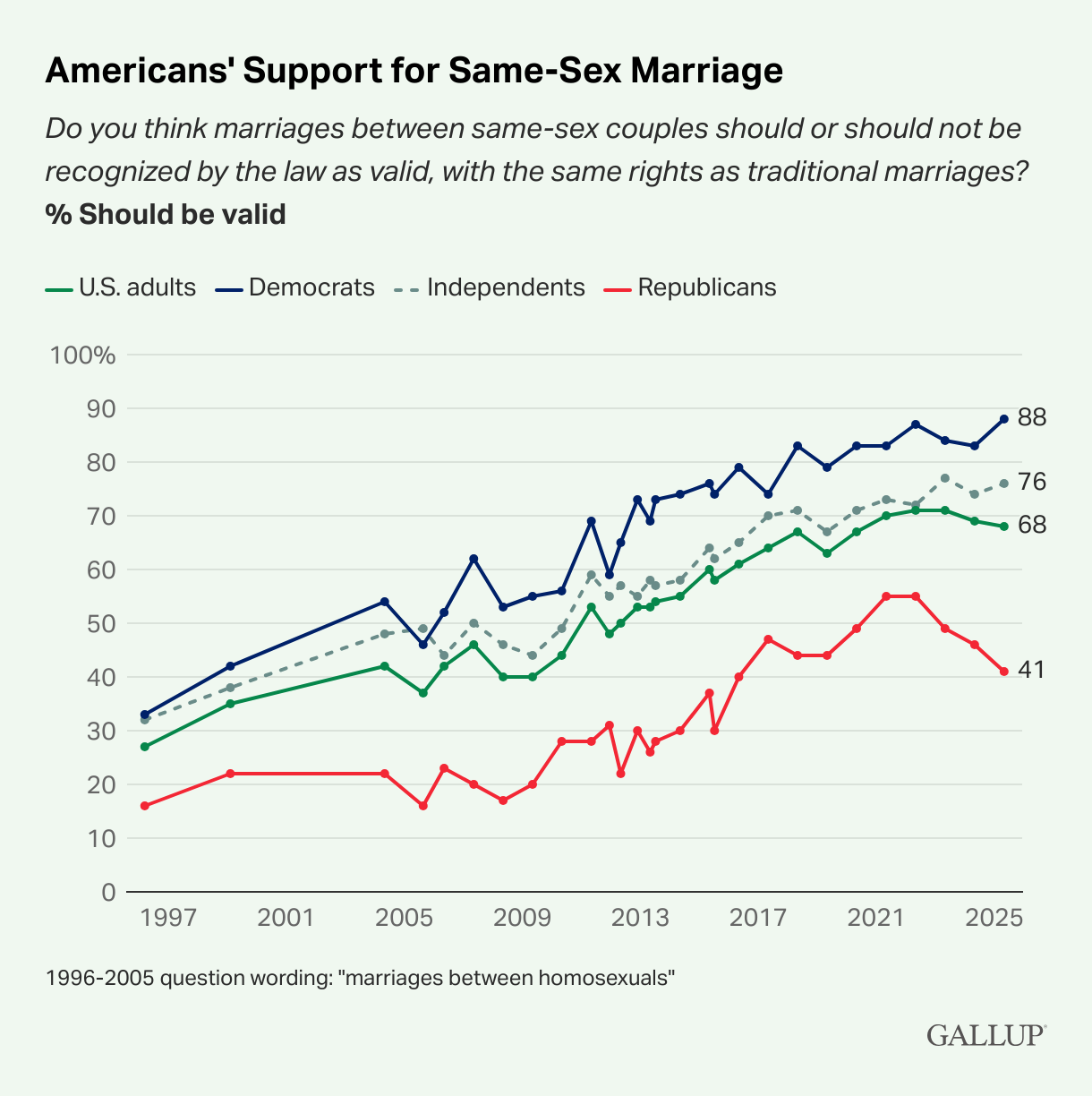
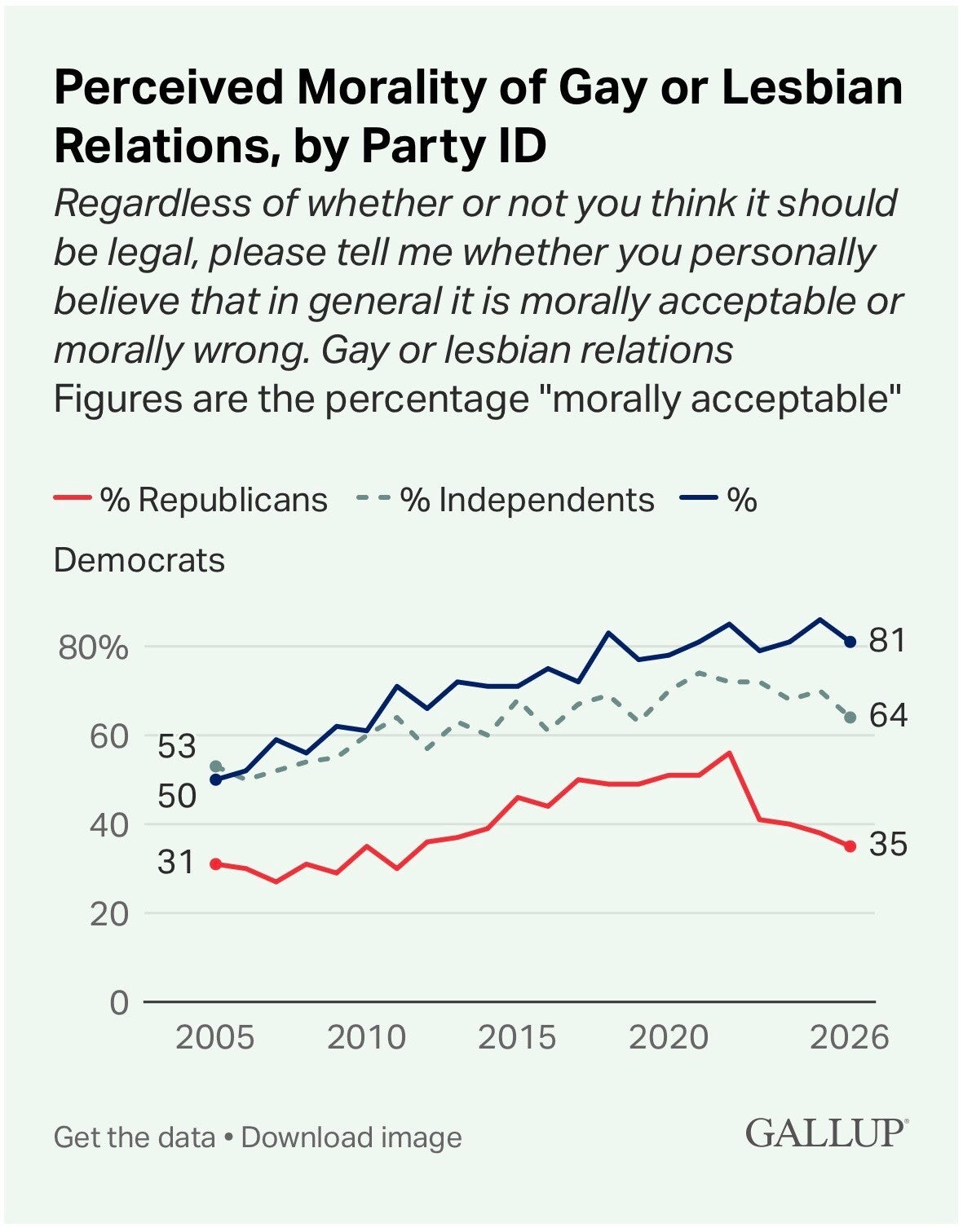
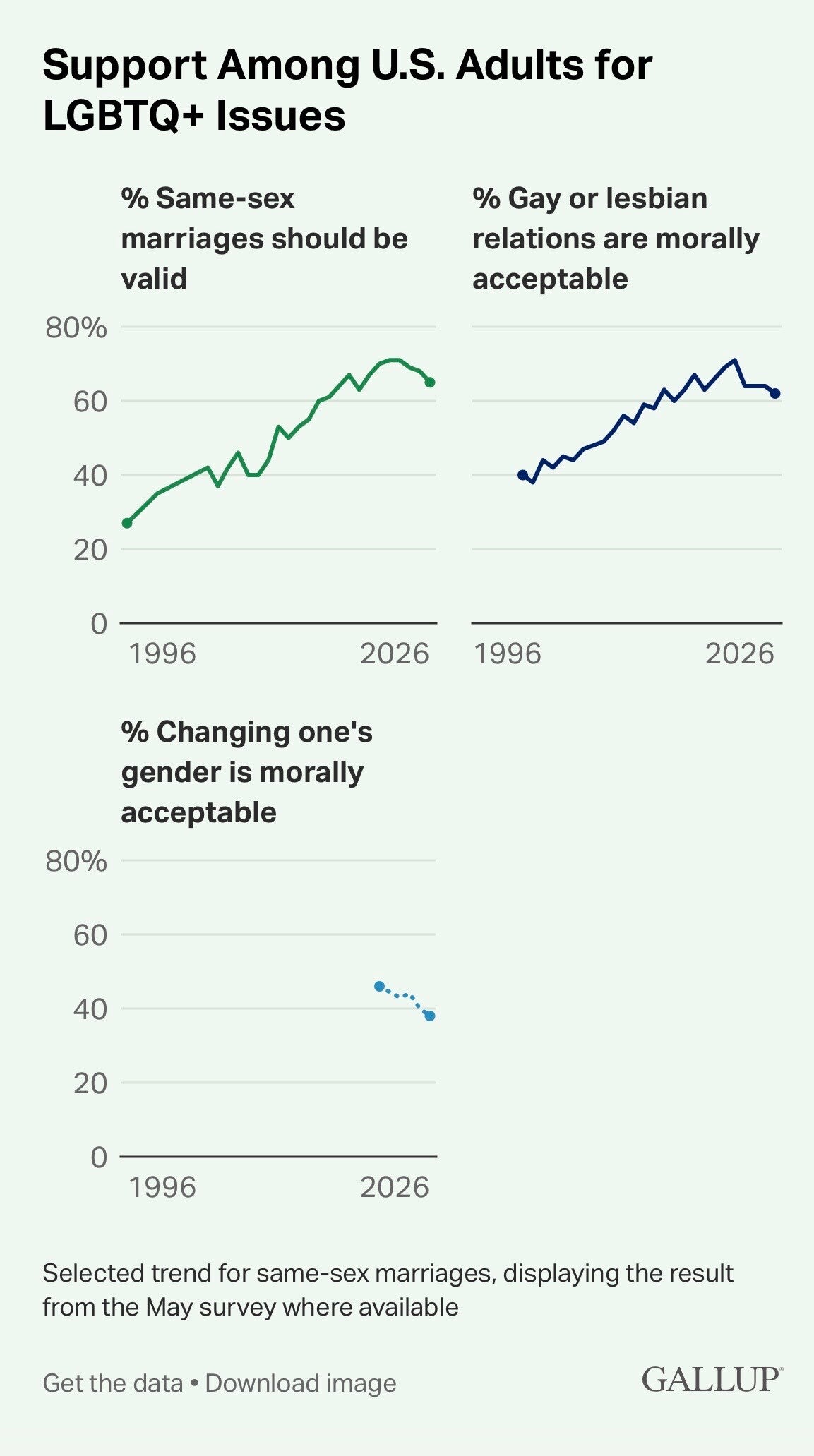
The shift in the treatment of the LGBTQ+ becomes very evident when we look at the statistics. According to a recent Gallup Poll, the percentage of people who perceived gay and lesbian relations as moral was 71% in 2022 and has now dropped to 62%. This is the lowest percentage since 2016. Comparatively, Canada's statistics sit at over 75%.
The percentage of U.S. adults who are in favor of legal same-sex marriage went from 71% down to 69% in 2024 and has declined the last two years, making the final approval rating for same-sex marriage drop by six points.
The Gallup Poll shows that Republicans are mostly responsible for the decline in support of LGBTQ+ relations and same-sex marriage. Support of gay and lesbian relations by Republicans dropped 21 points from 2022 and that means 35% of Republicans believe LGBTQ+ relations are morally acceptable—whereas 81% of Democrats believe it is morally acceptable.
In 2021 and 2022, 55% of republicans said they supported legal same-sex marriage, but currently the number has dropped to 37%, while 87% of democrats support same-sex marriage’s legality.
Independent parties have also dropped six points in their attitudes toward same-sex marriage making it 67% and in the subject of morality, independents have dropped eight points to 64%.
When it comes to trans people, 5% of Republicans believe that changing one’s gender is morally right. 60% of Democrats believe changing genders is acceptable and independents were at 42%. In 2021 these percentages were 22% of Republicans, 67% of Democrats, and 48% of independents.
These polls especially show that the anti-trans propaganda that the Trump administration is spewing has been working. We can’t abandon our trans brothers and sisters!
Some members of our community believe in dropping the TQ+ from LGBTQ+ so that it’s only inclusive for lesbian, gay, and bisexual people.
I feel that these people think if they distance themselves from trans people, they will be safe. This thinking is false and detrimental to our community’s rights. As previously noted, the acceptance of LGBTQ+ people has already dropped as well. We are all in this together and that is the only way we can effectively fight for our rights and resist bigotry and hate.
How can we resist? I have been involved in protests, written numerous letters to senators and state representatives, voted, and made videos on social media.
After a while, my resistance started to negatively affect my mental health. A wise friend told me that just by displaying queer joy—I was resisting.
We need to show the world that we are queer and happy. We are strong and have been fighting for our rights for so long. We need to be an example for others. Our youth need to know that they can grow up and lead a fulfilling, happy life. The bigots need to see that they can’t take away the joy we have in our lives through their fear mongering and bullying. Be safe, but be out and proud, and willing to assist other members of our community.
My ultimate form of resistance was to get married to Darren. I specifically wanted a short engagement so that we could be married before the possibility of same-sex marriage becoming illegal in the United States. Our very existence as a queer married couple helps show people that the LGBTQ+ community is about love and we don’t care about their percentages of acceptance from polls. We live our lives open and free as a married couple, unless it is a setting where it is physically unsafe to do so.
I urge any LGBTQ+ couple who is already engaged to marry sooner than later. I encourage those queer couples who believe in marriage and are in love to propose and wed.
I wish for every person in our community to live with as much joy as they can. Of course it is imperative that we all continue to vote as we stick together and not let this political climate tear our community apart from the inside and outside. We are stronger together as a family and if we don’t give up, we will succeed.





Join Your Own Joyride
By:
Val J Prime

We Won’t Stop: Radical Joy, Resistance, and The Revolution of Being Ourselves
By: Tyson Pete, Award-winning author of Courageous Love: a Self Help Guide for Gay Fathers
We Won’t Stop Wanting: Queer Pleasure as Resistance
By Kai DeMaeyer
Registered Psychotherapist (Qualifying)
talkwithkai.ca | kai@talkwithkai.ca

Basic Spells: Purification, Protection, Healing & Prosperity
By Adrien Clarke
Boundless Femininity
By John OKeefe
Rainbow Boudoir
Izalea Does Everything Vol 4
By Izzy
The Things I Didn’t Know When I Chose Noah
By Noah “The Stigma Fighter”

Design as Defiance: Framing Radical Joy and Non-Binary Expression in Private Spaces
By Daniel Cayer
When the clock strikes midnight on June 30th and the corporate rainbow banners are quietly folded away into storage bins, a strange thing happens. The public conversation around pride and identity seems to vanish from the storefronts.
But it doesn't actually disappear. It just moves indoors.
As interior designers—and simply as human beings trying to navigate a wild world—we know a home is never just a collection of matching furniture or a carbon copy of a Pinterest board. A home is a physical manifestation of your mind. It’s an act of beautiful, stubborn self-determination. For marginalized communities, and specifically for gender-expansive and non-binary folks, a home isn’t just a luxury—it’s the ultimate sanctuary. When the public sphere feels increasingly loud and hostile, our private spaces have to become bastions of Radical Joy and Uncompromising Resistance.
By intentionally designing our personal environments, we can transform four walls and a ceiling into a physical declaration of who we are. Here is how we build spaces that refuse to conform.
1. Zoning for Radical Joy: The Living Spaces
Let’s be honest: In a world that constantly demands we smooth down our edges to fit into neat little boxes, choosing a deeply expressive, maximalist aesthetic isn't just a design preference. It’s a quiet, glorious rebellion. Radical joy in design means looking at the sterile, rigid rules of what a living room should look like and throwing them out the window in favor of a curated abundance that makes your spirit soar.
To bring this unapologetic energy into your main living area or salon, focus on three things:
Curves and Fluid Shapes: Traditional institutional furniture is obsessed with harsh, rigid, 90-degree angles. Reject them. Introduce curved sofas, asymmetric rugs, and organic, undulating forms. These pieces celebrate the beauty of fluid lines and proudly defy strict categorization.
Tactile Extravaganza: Joy is something you can feel. Surround yourself with rich velvets, chunky bouclés, and deeply saturated colors that demand an emotional response. It’s about creating a sensory-rich hug of an environment that feels both protective and celebratory.
Curated Visibility: Do not hide the things that define you. Dedicate your gallery walls and prominent shelves to storied heritage pieces, queer literature, and art by local creators. When you put your history front and center, you weave your community directly into the fabric of your daily life.
2. Spatial Resistance: The Decompression Zone
Resistance takes energy, and let’s face it—sustained energy requires some serious, uninterrupted rest. You can't keep fighting if you don't have a place to fall apart and put yourself back together. A "Decompression Zone" is a designated area in the home entirely insulated from the noise, politics, and heavy demands of the outside world.
The Ritual Corner: Whether it's a cozy reading nook, a meditation cushion, or a window seat overlooking some messy, beautiful native plants, this zone belongs entirely to quiet contemplation. No phones, no news, no expectations.
Tactile Earthiness: Bring in materials that feel grounded and real—think limewash walls, matte terracotta, and raw, reclaimed wood. These organic textures literally connect us to the earth, dropping our cortisol levels and reminding us that we are stable, even when the outside world feels chaotic.
Lighting as a Shield: Throw away the harsh overhead lights (which frankly look like an interrogation room anyway). Use low-level, dimmable, warm architectural lighting. Create a soft, golden cocoon that signals to your nervous system: "Hey. You’re safe. You can drop your guard now."
3. Designing Beyond the Binary: July 14th and Spatial Fluidity
As we approach International Non-Binary People's Day on July 14th, it’s a beautiful reminder to challenge the rigid, dualistic structures that try to govern our lives. Standard residential architecture has historically been weirdly obsessed with strict binaries: Public versus private, formal versus informal, and worst of all, masculine versus feminine.
Designing a non-binary home means embracing spatial fluidity—moving away from exhausting clichés like "man caves" or "she sheds" and creating holistic, gender-neutral environments that focus entirely on personal energy, comfort, and real utility.
The Multi-Hyphenate Room: Let’s stop letting traditional home layouts dictate how we live. A spare room doesn’t have to just be a "guest bedroom." Make it a fluid creative studio—a space with modular furniture that can transition from an art workshop to a meditation space, or a vibrant gathering spot for community organizing.
An Unapologetic Mix of Eras: True resistance to conformity means rejecting the idea that your home has to match a single era from a furniture catalog. Blend the old with the new. Pair a sleek, ultra-modern neon light with a deeply sentimental, weathered antique dresser. This gorgeous juxtaposition tells a story of survival—it shows that the past, the present, and the future can coexist beautifully, entirely on our own terms.
The Ultimate Blueprint
Ultimately, our homes are the true blueprints of our values. By designing spaces that celebrate fluidity, prioritize comfort, and boldly showcase our community's identity, we are doing so much more than just decorating. We are constructing safe havens where we can rest, recharge, and mobilize.
We carry the electric energy of Pride right through our front doors and lock it into the very walls of our spaces. We won't stop the resistance, we won't surrender our joy, and we will continue to build spaces that honor exactly who we are—unapologetically, beautifully, and entirely home.

Resist Normative Relationship Expectation
By Skyler







Add comment
Comments